

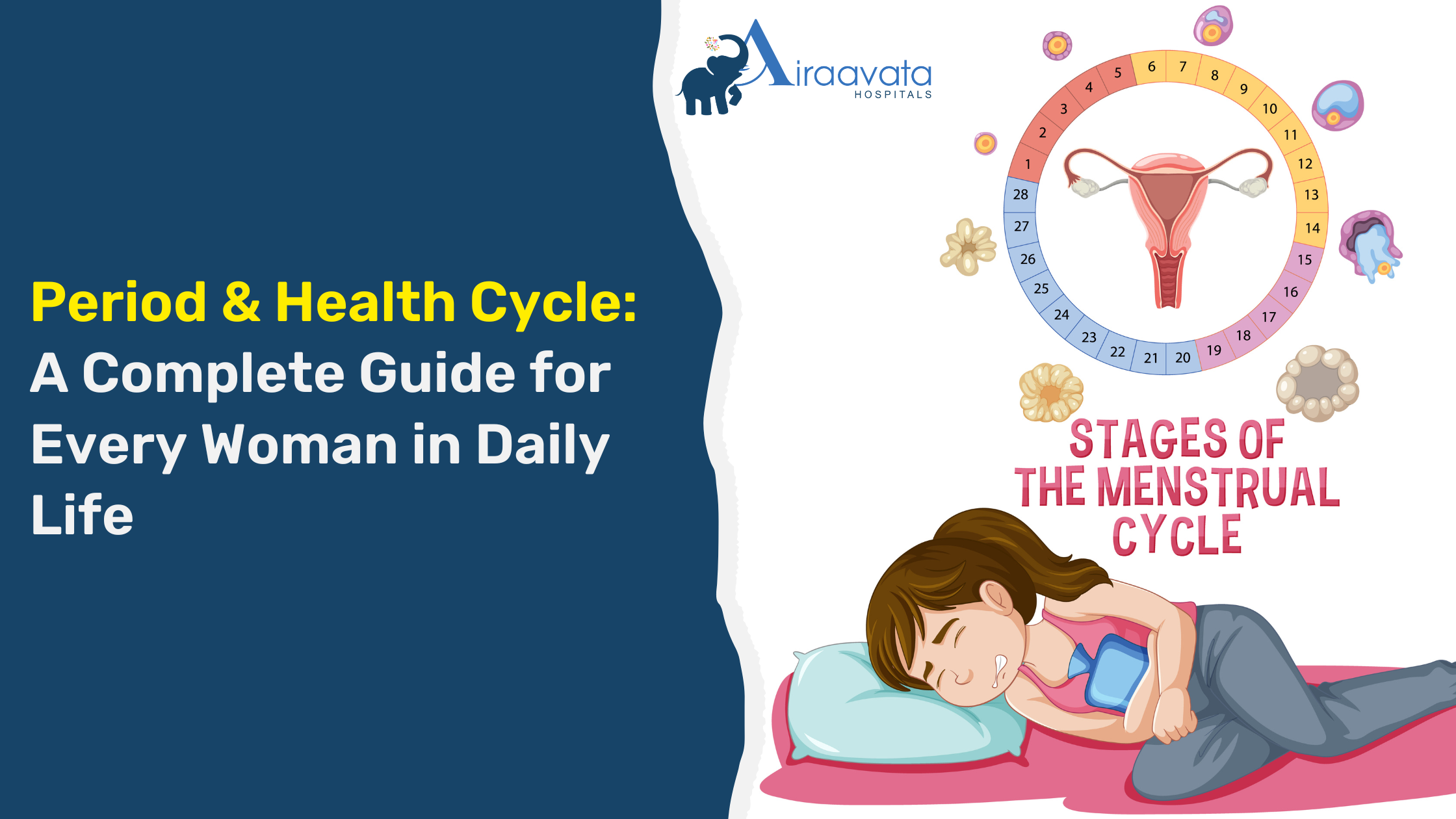
Period & Health Cycle: A Complete Guide for Every Woman in Daily Life By Airaavata Hospitals
– Caring for Women at Every Stage of Life
Menstrual health is one of the most important indicators of a woman’s overall well-being. Yet, many women ignore irregularities, discomfort, or hormonal changes thinking they are “normal.” At Airaavata Hospitals, we believe that understanding your menstrual cycle is the first step toward protecting your reproductive and hormonal health.
This guide explains everything you need to know about period and cycle health, what’s normal, what’s not, and when to consult a gynecologist.
Understanding the Menstrual Cycle
A typical menstrual cycle lasts between 21 to 35 days, with bleeding lasting 3 to 7 days. The cycle has four phases:
Menstrual Phase: Shedding of the uterine lining (your period)
Follicular Phase: Hormones prepare the body for ovulation
Ovulation Phase: Release of an egg (most fertile period)
Luteal Phase: Body prepares for pregnancy or next cycle
Every woman’s cycle is unique. Slight variations are normal, but frequent irregularities may indicate hormonal imbalance or underlying conditions.
What Is Considered Normal?
Healthy periods usually have:
- Predictable timing each month
- Moderate flow (not too heavy or too light)
- Manageable cramps
- No extreme mood swings
It’s important to track your cycle. Irregular patterns such as missed periods, cycles shorter than 21 days, or longer than 35 days should not be ignored.
Common Period Problems:
- Irregular Periods: Caused by stress, thyroid disorders, PCOS, weight fluctuations, or hormonal imbalance.
- Painful Periods (Dysmenorrhea): Mild cramps are common, but severe pain affecting daily life may require evaluation.
- Heavy Bleeding (Menorrhagia): Soaking pads every hour or bleeding longer than 7 days can lead to anemia.
- Missed Periods: Not always pregnancy. Can be due to stress, PCOS, excessive exercise, or hormonal issues.
- Premenstrual Syndrome (PMS): Mood swings, bloating, headaches, fatigue before periods.
At Airaavata Hospitals, our gynecology specialists provide complete evaluation through hormonal testing, ultrasound scans, and personalized treatment plans.
Why Period Health Matters
Your menstrual cycle reflects:
- Hormonal balance
- Reproductive health
- Thyroid function
- Nutritional status
- Stress levels
Ignoring symptoms can delay diagnosis of conditions like:
- PCOS (Polycystic Ovary Syndrome)
- Endometriosis
- Fibroids
- Thyroid disorders
- Early menopause
Early detection ensures better treatment outcomes and long-term health protection.
Daily Tips for Healthy Periods
Our gynecology experts at Airaavata Hospitals recommend:
- Maintain a Balanced Diet: Include iron-rich foods (spinach, dates, pomegranate), protein, and healthy fats.
- Stay Active: Regular exercise helps regulate hormones and reduce cramps.
- Manage Stress: Yoga, meditation, and proper sleep improve cycle regularity.
- Stay Hydrated: Water reduces bloating and fatigue.
- Avoid Self-Medication: Painkillers without medical advice can mask underlying issues.
When Should You See a Gynecologist?
Consult a specialist if you experience:
- Severe abdominal pain
- Bleeding between periods
- Missed periods for more than 3 months
- Extremely heavy bleeding
- Unusual discharge
- Irregular cycles for several months
At Airaavata Hospitals, we offer comprehensive women’s health screening through our Airaavata Signature Women Health Package, designed to evaluate hormonal health, reproductive wellness, and overall well-being.
Frequently Asked Questions
A normal menstrual cycle ranges from 21 to 35 days in adults. Teenagers may experience slightly irregular cycles initially.
If you need to change pads or tampons every hour for several hours, or bleeding lasts more than 7 days, it may be considered heavy.
Occasional irregularity can happen due to stress or lifestyle changes. However, frequent irregular cycles should be evaluated by a gynecologist.
If the pain interferes with daily activities or requires strong pain medication regularly, consult a specialist.
Yes. Balanced nutrition, exercise, stress management, and adequate sleep significantly improve hormonal balance.
Conclusion:
Your period is a monthly health report from your body. Listening to it can prevent serious health issues. Prioritize your well-being, schedule regular checkups, and never ignore symptoms. Visit Airaavata hospitals, Tellapur. 502032.
For Emergency: +91 9010576576