

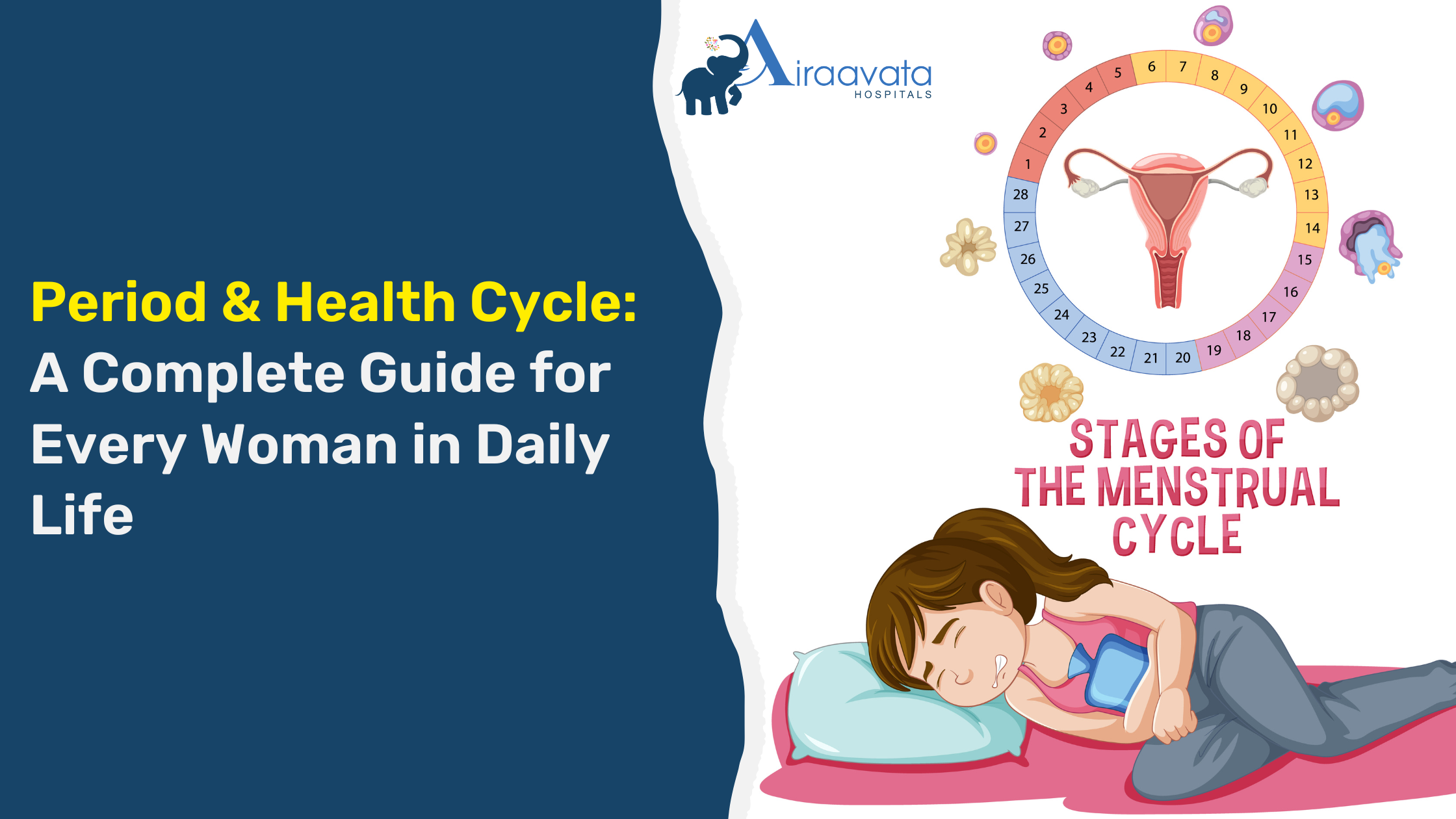
Period & Health Cycle: A Complete Guide for Every Woman in Daily Life By Airaavata Hospitals
– Caring for Women at Every Stage of Life
Menstrual health is one of the most important indicators of a woman’s overall well-being. Yet, many women ignore irregularities, discomfort, or hormonal changes thinking they are “normal.” At Airaavata Hospitals, we believe that understanding your menstrual cycle is the first step toward protecting your reproductive and hormonal health.
This guide explains everything you need to know about period and cycle health, what’s normal, what’s not, and when to consult a gynecologist.
Understanding the Menstrual Cycle
A typical menstrual cycle lasts between 21 to 35 days, with bleeding lasting 3 to 7 days. The cycle has four phases:
Menstrual Phase: Shedding of the uterine lining (your period)
Follicular Phase: Hormones prepare the body for ovulation
Ovulation Phase: Release of an egg (most fertile period)
Luteal Phase: Body prepares for pregnancy or next cycle
Every woman’s cycle is unique. Slight variations are normal, but frequent irregularities may indicate hormonal imbalance or underlying conditions.
What Is Considered Normal?
Healthy periods usually have:
- Predictable timing each month
- Moderate flow (not too heavy or too light)
- Manageable cramps
- No extreme mood swings
It’s important to track your cycle. Irregular patterns such as missed periods, cycles shorter than 21 days, or longer than 35 days should not be ignored.