

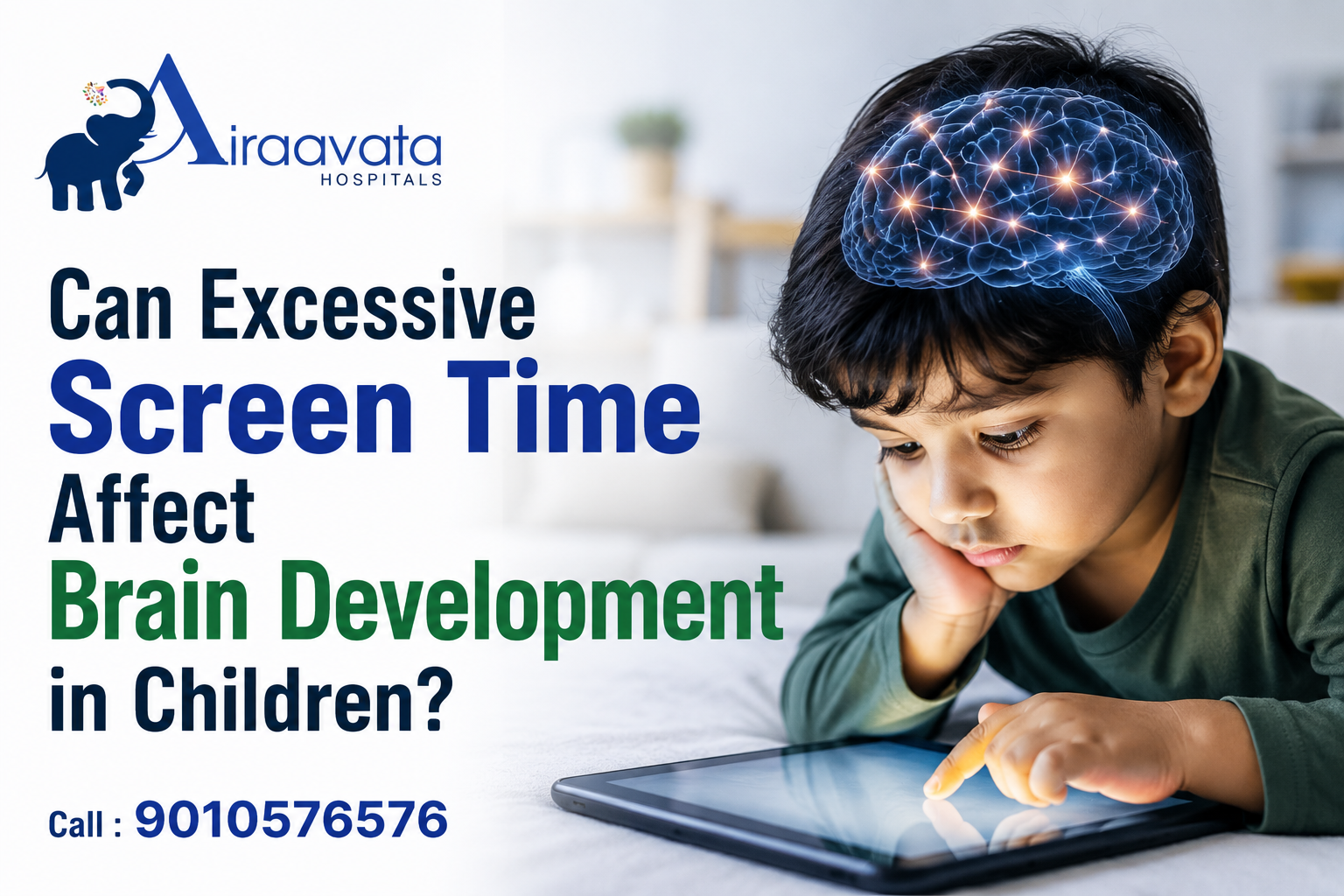
Can Excessive Screen Time Affect Brain Development in Children?
In today’s digital age, smartphones, tablets, televisions, and computers have become an integral part of our daily lives. While technology offers educational and entertainment benefits, excessive screen time has raised concerns among parents and healthcare professionals alike. One of the most frequently asked questions is: Can excessive screen time impact brain development in children? The answer is Yes especially during the early years of life when the brain is rapidly developing.
Understanding Brain Development in Children
A child’s brain undergoes significant growth during the first five years of life. During this period, children develop language skills, social abilities, emotional regulation, and cognitive functions through real-world experiences and interactions. Activities such as talking, reading, playing outdoors, and interacting with family members play a crucial role in healthy brain development.
Excessive screen exposure can sometimes replace these essential developmental experiences.
How Excessive Screen Time Affects Brain Development
1. Delayed Language Development
Children learn language primarily through face-to-face interactions. Spending long hours on screens may reduce opportunities for conversation, storytelling, and social engagement, potentially leading to delayed speech and language development.
2. Reduced Attention Span
Fast-paced digital content can overstimulate young minds. Studies suggest that excessive screen time may contribute to shorter attention spans and difficulty concentrating on tasks.
3. Sleep Disturbances
The blue light emitted from screens can suppress melatonin production, disrupting sleep patterns. Quality sleep is essential for memory, learning, and healthy brain development.
4. Behavioral and Emotional Challenges
Excessive screen use has been associated with irritability, mood swings, anxiety, and difficulty regulating emotions in some children.
5. Reduced Physical Activity
Increased screen time often means less time spent engaging in physical activities. Exercise and active play are vital for both physical and cognitive development.
Recommended Screen Time for Children
According to pediatric guidelines:
Below 18 months: Avoid screen time except for video calls.
18–24 months: Introduce only high-quality content with parental supervision.
2–5 years: Limit screen time to about 1 hour per day of quality programming.
6 years older: Set consistent limits while encouraging healthy activities.
Tips for Healthy Screen Habits
- Encourage outdoor play and physical activity.
- Read books together daily.
- Create screen-free family time.
- Avoid screens during meals and before bedtime.
- Choose educational content and watch together.
- Set age-appropriate screen limits.
When Should Parents Seek Medical Advice?
If your child experiences speech delays, behavioral changes, sleep disturbances, or developmental concerns, consult a pediatric specialist for evaluation and guidance.
At Airaavata Hospitals, our pediatric experts provide comprehensive child healthcare services, developmental assessments, and parental guidance to support healthy growth and development.
If you are looking for the best hospital in Tellapur, best hospital near Nallagandla, or a trusted healthcare center in Lingampally, Airaavata Hospitals offers expert medical care with a patient-first approach.
Conclusion
Technology is an essential part of modern life, but moderation is key. While screens can provide educational benefits, excessive screen time may impact brain development, sleep, attention, and social skills in children. By promoting balanced habits and encouraging real-world interactions, parents can support healthy brain development and overall well-being.
Expert Care at Airaavata Hospitals
Airaavata Hospitals offers 24/7 emergency services, experienced doctors, and advanced care for heat-related illnesses.
Emergency Contact: +91 9010576576