
Pregnancy Ultrasound Scans: A Complete Guide to Dating Scan, Nuchal Scan, TIFFA Scan & Growth Scan
Pregnancy is a beautiful journey filled with excitement, anticipation, and important milestones. One of the most essential aspects of prenatal care is undergoing timely pregnancy scans that help monitor the health and development of your baby throughout pregnancy.
At Airaavata Hospitals, Tellapur, we offer advanced pregnancy ultrasound scans, including Dating Scan, Nuchal Translucency (NT) Scan, TIFFA Scan, and Growth Scan, ensuring comprehensive fetal monitoring and maternal care. Our experienced radiologists in tellapur and obstetricians work together to provide accurate assessments and peace of mind to expectant parents.
Why Are Pregnancy Scans Important?
Pregnancy scans use ultrasound technology to create images of your growing baby inside the womb. These scans help doctors:
- Confirm pregnancy and due date
- Monitor fetal growth and development
- Detect structural abnormalities
- Assess placental health
- Monitor amniotic fluid levels
- Evaluate the baby’s position before delivery
- Identify potential complications early
Regular pregnancy scans play a crucial role in ensuring a healthy pregnancy and safe childbirth.
Dating Scan: Confirming Your Pregnancy Timeline
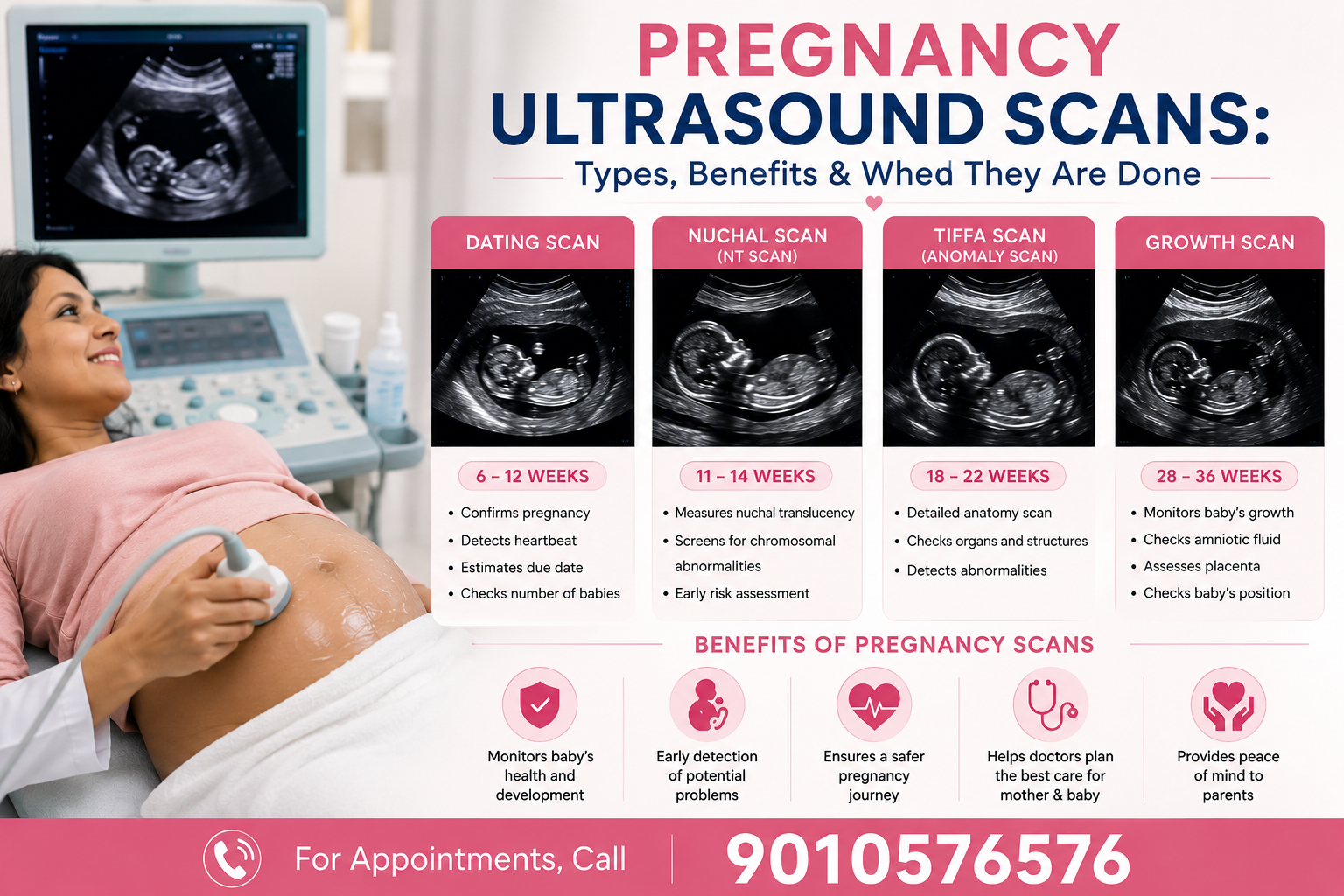
The Dating Scan is usually performed between 6 and 12 weeks of pregnancy.
Purpose of a Dating Scan
This scan helps determine:
- Confirmation of pregnancy
- Number of babies (single or multiple pregnancy)
- Accurate gestational age
- Estimated due date (EDD)
- Detection of fetal heartbeat
- Early assessment of pregnancy viability
Many women are unsure about the exact date of conception. The Dating Scan provides accurate information regarding the baby’s age and helps plan prenatal care effectively.
Benefits of a Dating Scan
- Accurate pregnancy dating
- Early reassurance for parents
- Detection of multiple pregnancies
- Early identification of complications
Nuchal Translucency (NT) Scan: Early Screening for Chromosomal Conditions
The Nuchal Translucency Scan is typically performed between 11 and 14 weeks of pregnancy.
What Is an NT Scan?
This scan measures the fluid collection at the back of the baby’s neck. An increased thickness may indicate a higher risk of certain chromosomal conditions.
What Does the NT Scan Assess?
- Risk assessment for Down Syndrome
- Screening for chromosomal abnormalities
- Early detection of congenital heart defects
- Evaluation of fetal development
It is important to note that the NT Scan is a screening test and not a diagnostic test. Additional investigations may be recommended if required.
Why Is the NT Scan Important?
Early screening allows parents and healthcare providers to make informed decisions and plan appropriate prenatal care when necessary.
TIFFA Scan: A Detailed Assessment of Baby's Development
The TIFFA Scan (Targeted Imaging for Fetal Anomalies) is one of the most important pregnancy scans and is generally performed between 18 and 22 weeks.
What Is a TIFFA Scan?
A TIFFA Scan is a detailed ultrasound examination that evaluates the baby’s anatomy and development.
What Does the TIFFA Scan Check?
- Brain development
- Facial structures
- Spine
- Heart
- Kidneys
- Limbs
- Stomach
- Bladder
- Placenta
- Umbilical cord
The scan helps identify structural abnormalities and ensures that the baby is developing normally.
Benefits of a TIFFA Scan
- Comprehensive fetal anomaly screening
- Detailed organ assessment
- Early detection of developmental abnormalities
- Better pregnancy management
For many parents, the TIFFA Scan is an exciting milestone because it provides a detailed view of their baby’s growth and development.
Growth Scan: Monitoring Baby's Progress
The Growth Scan is usually performed during the third trimester, often between 28 and 36 weeks of pregnancy.
Purpose of a Growth Scan
As the baby grows, doctors need to ensure that development is progressing appropriately.
The Growth Scan helps evaluate:
- Baby’s growth pattern
- Estimated fetal weight
- Amniotic fluid levels
- Placental position and function
- Blood flow assessment
- Baby’s position before delivery
Why Is a Growth Scan Necessary?
Some babies may grow slower or faster than expected. Growth Scans help identify concerns such as:
- Growth restriction
- Large baby (Macrosomia)
- Reduced amniotic fluid
- Placental insufficiency
Early identification of these issues allows timely medical intervention.
Pregnancy Scans and Maternal Health
Pregnancy scans not only monitor the baby’s development but also assess maternal health factors that can influence pregnancy outcomes.
At Airaavata Hospitals, our specialists carefully evaluate both mother and baby during every stage of pregnancy, ensuring personalized care and continuous monitoring.
When Should You Schedule Pregnancy Scans?
Recommended Pregnancy Scan Schedule
- Dating Scan : 6–12 Weeks
- Nuchal Translucency (NT) Scan : 11–14 Weeks
- TIFFA Scan : 18–22 Weeks
- Growth Scan : 28–36 Weeks
Following this schedule helps ensure comprehensive fetal monitoring throughout pregnancy.
Expert Care at Airaavata Hospitals
Airaavata Hospitals offers 24/7 emergency services, experienced doctors, and advanced care for heat-related illnesses.
Emergency Contact: +91 9010576576